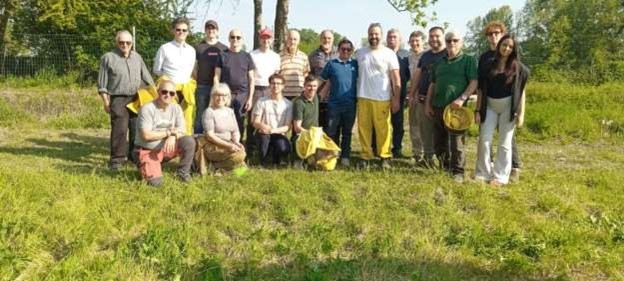
Capacity building in beekeeping through the use of the drone frame. Technical exchange in Italy
Angel Majuan García, a professional from the APROCASSI Agricultural Cooperative, took part in the workshop ‘Interpreting hive development through the drone frame’, organised by the Api Lombardia Beekeeping Association in Italy, as part of the exchange of knowledge and technology …
Angel Majuan García, a professional from the APROCASSI Agricultural Cooperative, took part in the workshop ‘Interpreting hive development through the drone frame’, organised by the Api Lombardia Beekeeping Association in Italy, as part of the exchange of knowledge and technology transfer between international and local experiences.
This technical exchange activity takes place within the framework of the BLF Andes Amazónico Project, implemented by a consortium led by Practical Action and comprising Terra Nuova in collaboration with the APROCASSI Agricultural Cooperative, in which various actions are being carried out to strengthen the technical capacities of beekeepers, with the aim of improving the productivity, quality and sustainability of the honey value chain.
The aim of this workshop was to introduce and validate a practical and efficient methodology for assessing the productive and health status of hives, using the drone frame as a rapid diagnostic tool. Assessing the hive using this method is carried out in the periods leading up to the harvest, enabling beekeepers to interpret the behaviour of the bees and anticipate key technical decisions regarding production management.
The drone brood frame involves inserting a half-height frame into the brood chamber, positioned specifically in one of the corners of the hive. This strategic placement takes account of the natural behaviour of the ‘superorganism’ that makes up the hive, where the queen tends to lay drone eggs in peripheral areas. Once the super is installed, the worker bees complete the construction of the frame, creating cells where the queen lays eggs for both worker bees and drones.
Once the frame has been constructed, a partial cut is made in it, leaving a section intact to observe the hive’s ability to rebuild. This process is assessed over a period of approximately 8 days. If the bees quickly rebuild the frame, this is interpreted as an indication that the hive is in optimal condition, with an active queen, a healthy population and adequate sanitary conditions. Conversely, if no reconstruction is evident or irregular cells are observed, this constitutes a warning sign requiring a more thorough inspection of the brood chamber, as it may be associated with problems such as an ageing queen, disease, environmental stress or the onset of swarming.
Furthermore, the use of the drone frame allows for the identification of key aspects of the hive’s health status and helps to keep the percentage of Varroa infestation low, one of the main threats to beekeeping. It also facilitates the assessment of the hive’s internal balance, taking into account factors such as brood distribution, food availability and bee behaviour.
From a biological perspective, it is important to note that although drones perform fewer functions than worker bees, they play significant roles within the hive, such as thermal regulation and their indirect involvement in the processes of transforming nectar into honey. Their presence and distribution within the hive also provide valuable information on population and reproductive dynamics.
One of the main benefits of this method is that it optimises the time taken to inspect hives. Whilst the traditional method of conducting a full inspection can take up to three days to assess 100 hives, the use of the drone frame significantly reduces this time, making it possible to inspect the same number of hives in a single day. This operational efficiency not only reduces labour costs but also improves the technical response capacity to potential problems in the field.
In terms of impact, the implementation of this tool directly contributes to improved decision-making by producers, strengthening their technical management capacity, reducing production risks and promoting more sustainable beekeeping practices. It also aligns with the objectives of the BLF Andes Amazónico project, which focus on integrated landscape management, climate resilience and the strengthening of sustainable livelihoods for coffee-growing families.
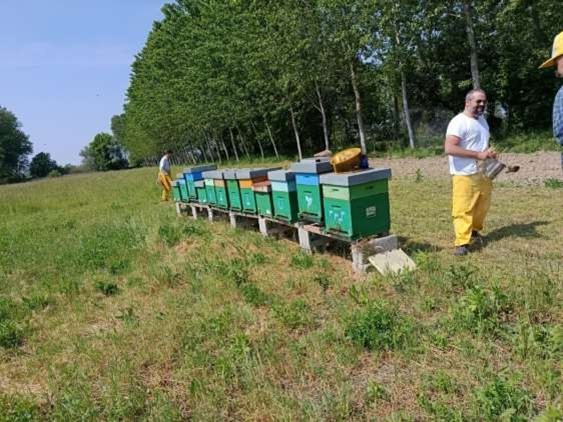
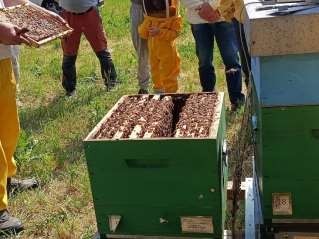
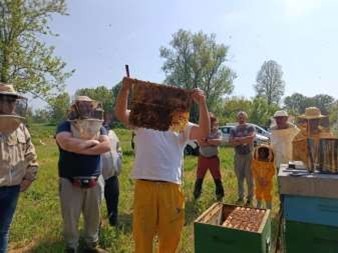
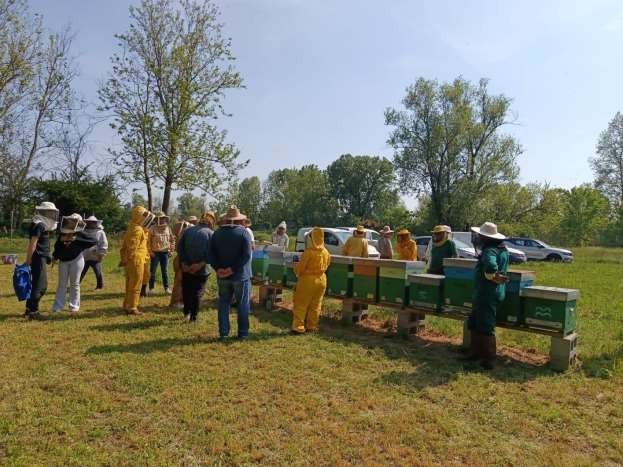
The image shows the layout of the apiary belonging to the Api Lombardía Beekeeping Association, where the workshop took place.
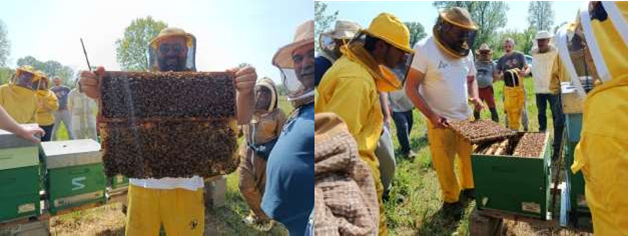
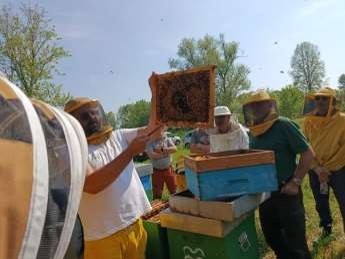
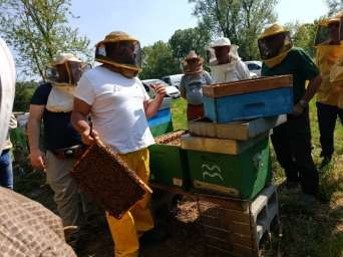
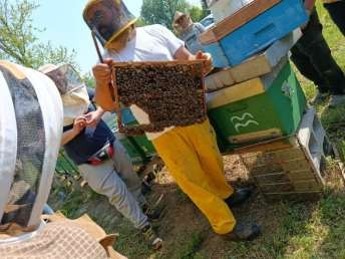
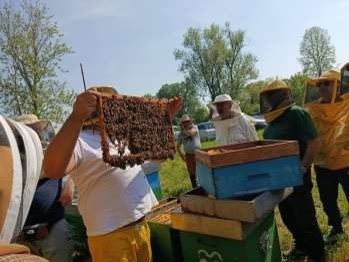
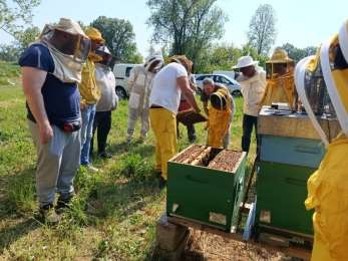
The images illustrate the technical procedure used to analyse the drone comb, a key tool for beekeeping monitoring. This method quickly and efficiently assesses the productive and health status of the hive, identifying indicators such as queen activity, the hive’s ability to rebuild the comb, and potential problems such as stress or disease, thereby facilitating timely decision-making in the field.
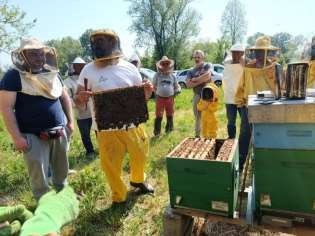
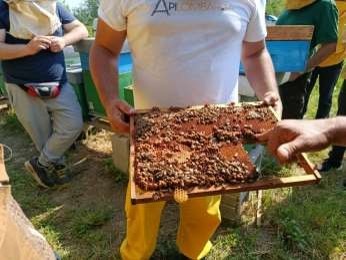
The diagnosis obtained after making a partial cut in the frame built by the bees is shown; this is a technique used to assess the general condition of the hive. The rapid reconstruction of the comb by the bees demonstrates active and healthy behaviour, indicating the colony is in good physiological condition. Furthermore, this result reflects the presence of a queen in optimal laying condition, an adequate population of worker bees and a favourable internal balance. Taken together, these indicators allow us to conclude that the hive is in an adequate productive and health status
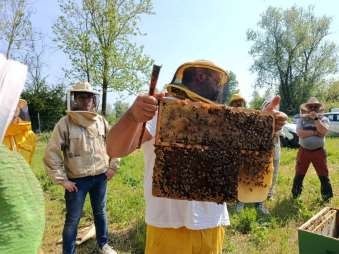
The images show the behaviour of the hives following the partial cutting of the frame, demonstrating that the bees do not rebuild the altered structure. This behaviour is a significant technical indicator, as it suggests changes in the hive’s normal state. Furthermore, the presence of queen cells—cells intended for the rearing of new queens—can be observed, which is associated with swarming or queen replacement. This situation reflects a change in the internal dynamics of the hive, requiring a detailed assessment of the hive’s health status, the queen’s age and management conditions